


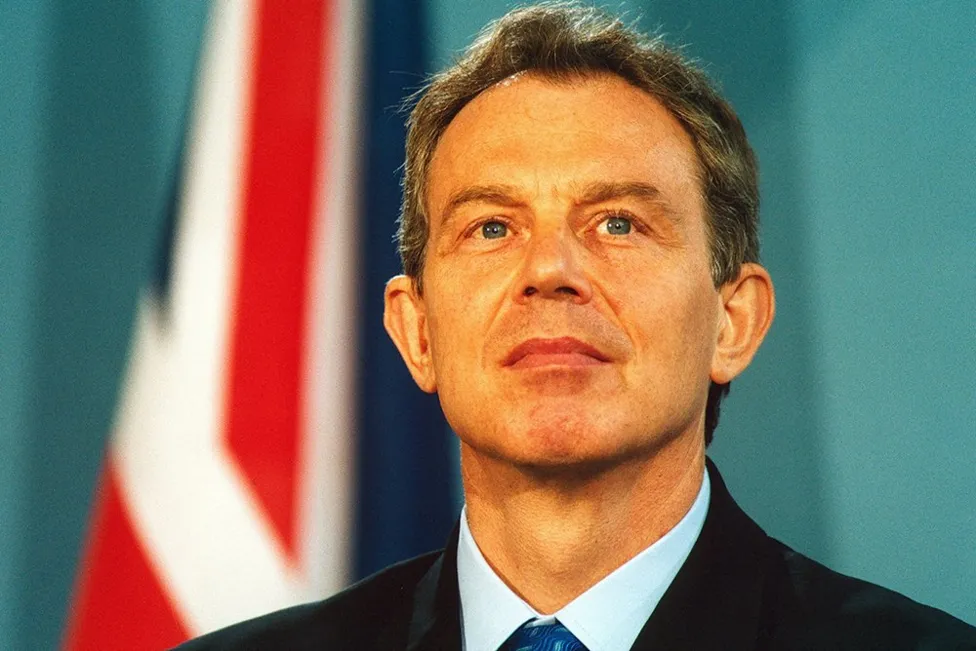
A detention camp on the Isle of Mull and breaking international law were among measures on migration presented to Tony Blair when he was prime minister, according to newly released files.
Papers from 2003 released by the National Archives show Mr Blair was increasingly frustrated by the failure to deter people from coming to the UK and called for more “radical” ideas.
Other suggestions presented to him included safe havens overseas for those whose asylum claims were rejected.
In a paper entitled “Asylum: the nuclear option”, advisers even questioned whether the UK needed an asylum system at all, because refugees would already have passed through a safe country before reaching Britain's shores.
Some of the ideas discussed in “brainstorming” sessions have strong parallels with the policies of the current government, though the most controversial measures were never enacted by the Labour administration.
Twenty years before the current PM Rishi Sunak promised to put a halt to illegal boat crossings using the Channel, the Labour government was facing intense pressure as migrants used the ferries and the Channel Tunnel to reach the UK.
In 2002 there were a record 84,132 asylum applications in Britain, despite efforts by Tony Blair's government to make the country less attractive to asylum seekers, for example by denying them the right to work. The figure that year is still the highest since records began.
However people continued to travel illegally to Britain. Asylum seekers were filmed climbing the Eurostar fences close to the Channel, getting into the freight areas to travel to the UK on or inside lorries. In 2002, the refugee camp at Sangatte, near Calais, had just been closed by the French authorities. Like the so-called jungle in more recent times, it had been a staging post for many trying to reach the UK.
At that time, the vast majority of asylum applications in the UK were turned down. According to the Migration Observatory at the University of Oxford, less than 20% were successful.
By December of that year the numbers seeking asylum were falling, but Tony Blair wanted a new approach. On a briefing note he wrote: “We must search out even more radical measures.”
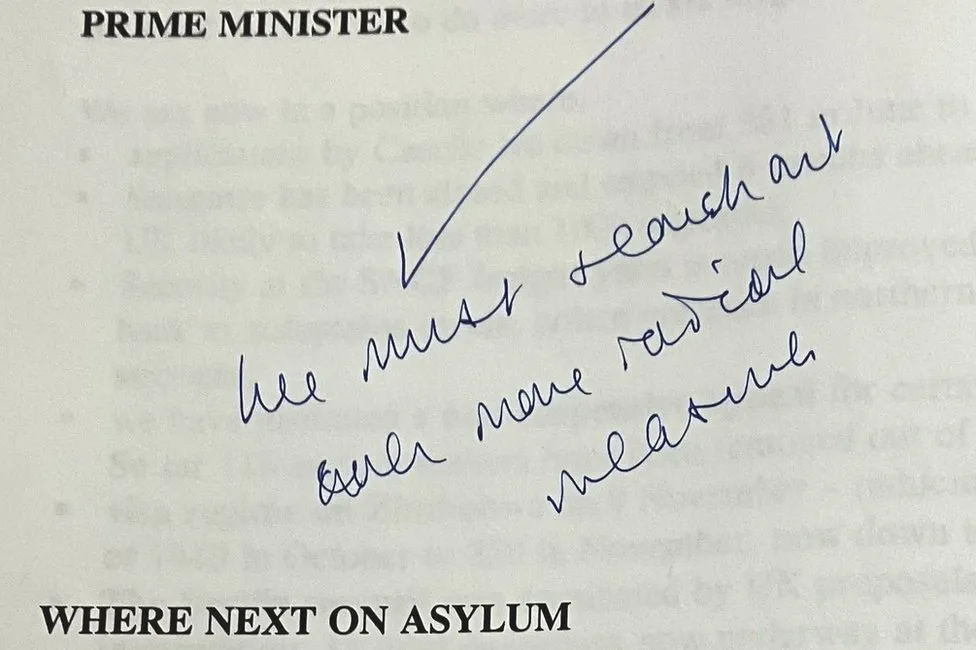
So advisers and officials from across government departments held a idea-generating session on 22 January 2003, chaired by Jonathan Powell, Mr Blair's chief of staff. What the group came up with were not necessarily endorsed by Mr Blair, but were suggestions for consideration.
‘Send a strong message'
They considered several areas where it was “worth looking at a big bang solution” to “send a shock through the system”. The first was to legislate “incompatibly” with the European Convention on Human Rights – meaning the UK would breach international law.
It would allow the government to remove illegal immigrants “regardless of the risk that they might suffer inhuman or degrading treatment”.
The advisers recognised this would be challenged, and the UK would almost certainly lose when the case was heard in the Court of Human Rights in Strasbourg. But they said: “We would have 2-3 years in the meantime when we could send a strong message into the system about our new tough stance.”
They saw several other problems with this approach, however, including “international political pain” – the likely response from other countries. Another deterrent would be to set up “safe havens” in third countries for failed asylum seekers, as returning them to their country of origin could put them at risk.
Iraqis failing in their claim could be sent to a centre in Turkey, and Somalis to Kenya, they suggested. The Foreign & Commonwealth Office said that Turkey might be ready to consider this.
This differs from the current government's policy, which could see people entering the UK illegally sent to Rwanda and their asylum application dealt with by that country instead of the British government.
‘The Nimby factor'
The advisers also thought following the Australian approach, detaining people in camps, could be an effective deterrent. They wrote it had driven down the number of new applications “enormously”.
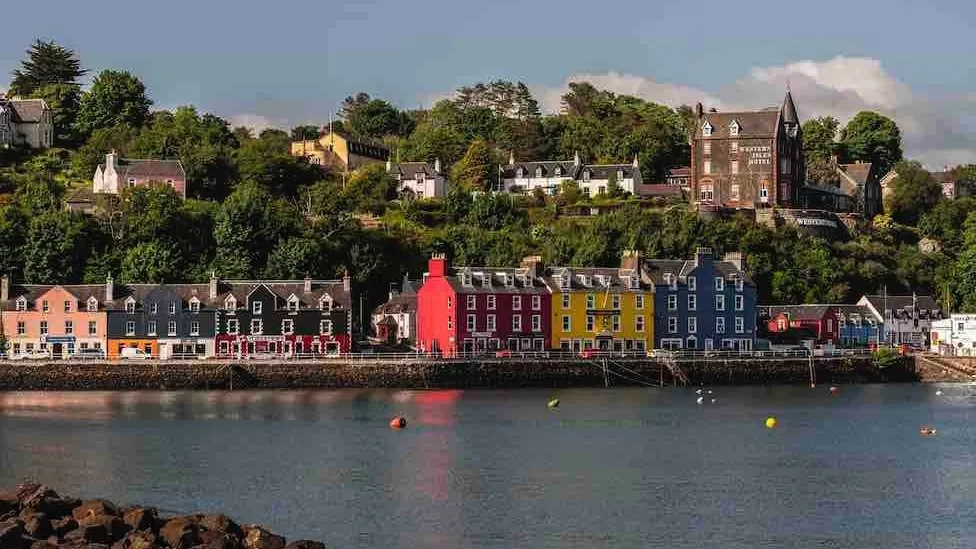
The attorney general's office had suggested setting up a camp in the Isle of Mull, where people could be detained before being returned. Mr Powell doubted this would work because of the “Nimby” factor (“not in my back yard”), but said he had commissioned more research into detention and tagging.
And Mr Powell questioned the purpose of the UK's asylum system.
“As an island, people who come here by sea have by definition already passed through a safe country. And very few of those who apply at airports are genuine refugees,” he wrote.
“Ideally we should not have an asylum hearing at all, simply a decision by an immigration officer to return someone followed by a one tier fast appeal against that decision if that is necessary.”
“Goodness, this is so similar to the debate we're having now,” said Dr Peter Walsh of the Migration Observatory when he read the advisers' paper.
Dr Walsh noted there was a common perception that Conservative governments “are those that truck in immigration and asylum restriction”, but this was a clear case that it is “the preserve of Labour governments too”.
In 2004 Tony Blair confirmed the government was in talks with Tanzania about processing asylum claims for Britain there – what is commonly known as offshore processing. The government had also discussed sending failed Somali asylum seekers to Tanzania.
The Blair government did eventually bring in other tougher measures on border control and visas. They were effective: the annual number of asylum applications fell, reaching a low of 17,916 in 2010, the last year of the Labour administration. It has risen since – in 2022, 81,130 applications were made – close to the 2002 level.
Other files released on Friday show:
- In early 2003 Tony Blair feared Home Secretary David Blunkett's proposals to create “tolerance zones” for prostitution would “provoke a great outcry”. The plans were included in the final consultation paper, published the following year
- Downing Street attacked the BBC over its Iraq War coverage. Alastair Campbell, then Mr Blair's press secretary, suggested that the government should threaten legal action against the corporation, in a memo to the prime minister dated 6 July. Relations between the BBC and the government were especially fraught at that point, after Andrew Gilligan had reported that the government manipulated intelligence about Iraq to build a case for war
- Tony Blair was enthusiastic about a proposal to return the Parthenon Sculptures, or Elgin Marbles, to Greece in an attempt to boost support for London's bid to host the Olympic Games in 2012. But advisers warned the attempt to reach an agreement with Athens over sharing the relics could face heavy resistance from the British Museum, where they were housed.
— CutC by bbc.com
